Showing posts with label history. Show all posts

Monday, August 3, 2009

Thomas Myddelton, Lord Mayor of London

Today, Thomas Myddelton (c1550-1631) is pretty much forgotten in favour of his younger brother Hugh of New River fame. However, Thomas was pretty important and successful in his own right: knighted by James I, he became Lord Mayor of London in 1613 and an MP for the city in 1624.

Thomas was originally apprenticed as a grocer but became a wealthy merchant as well as an influential alderman. He traded in sugar and built a refinery in Mincing Lane, was one of the founders of the East India Company and had invested in Drake's and Raleigh's privateering expeditions (many of these activities we would consider ethically dubious today, but were a good way to gain money and influence then). Much of his investment would have been funded by his position as surveyor of the customs and excise: it was accepted that monies collected in this post could be used for private speculation until they were due to be handed to the exchequer.


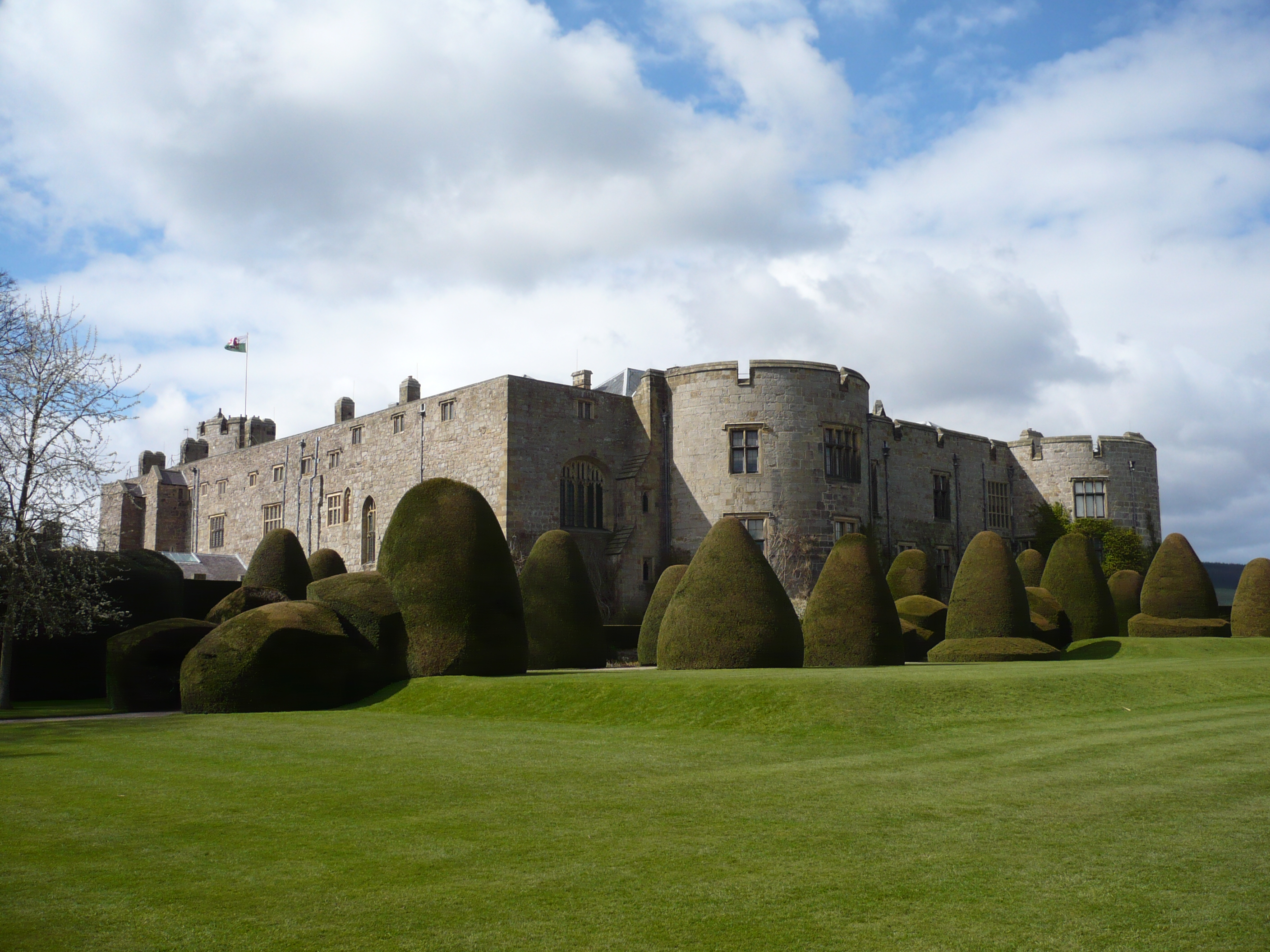
Myddelton divided his time between London and Wales. He purchased Chirk Castle in Denbighshire for £4,800 in 1595 and converted it from a mediaeval fortress to a comfortable Tudor home. Later, he gave it to his son as a wedding present. Other contacts with his home country included the provisions of loans to hundreds of fellow Welsh people. He also funded the publication of religious books in Welsh, including the first portable bible.

Image: Chirk Castle by Prichardson on wikipedia.

Wednesday, May 27, 2009

The London Welshman who invented =

We've already looked at the London Welshman who invented the pi symbol; today, we've another London Welsh mathematician who invented the 'equals' symbol.

Robert Recorde was born in 1510 in Tenby, and went to Oxford University in 1525. Having taught maths there for a while, he went on to Cambridge to qualify as a doctor before moving to London. There, he was physician to Edward VI and controller of the Royal Mint. Among his publications was The Urinal of Physick, which sounds disrespectful but was actually a guide to the then-mainstream practice of making diagnoses by inspecting the patient's urine. In 1558, though, he would die in debtors' prison after being sued for libel by his enemy, the hugely powerful Earl of Pembroke.

Only a year earlier, he had published the snappily-titled The Whetstone of Witte, whiche is the seconde parte of Arithmeteke: containing the extraction of rootes; the cossike practise, with the rule of equation; and the workes of Surde Nombers. Whatever the shortcomings in the name of the book, the contents contained one amazing innovation: the introduction of the equals sign.


How did mathematicians manage before this invention? By writing the word, often in Latin, or using one's own choice of abbreviation such as aeq. How much easier it is to draw two quick lines - something for which we have to thank Robert Recorde. Even ardent Scrabble enthusiasts, however, probably don't thank him for his other invention: zenzizenzizenzic,* the English word with the most zs!

* Zenzizenzizenzic = the 8th power of a number. It's useless for Scrabble, which has only one Z and two blanks!


Sunday, April 26, 2009

Dr Richard Price of Newington Green

Newington Green Unitarian Church is London's oldest Nonconformist place of worship still in use. Among its famous worshippers was 'mother of feminism' Mary Wollstonecraft; her friend and mentor Dr Richard Price was the church's most prominent minister.

Price was born in Llangeinor, Glamorgan in 1723 and came to London in 1740 to study; from 1758 he was preacher at Newington Green. He put forward politically radical ideas in his preaching. In 1789, as the Bastille fell, he preached a pro-revolutionary sermon On Love of Country. He similarly supported the American Revolution, arguing that while the monarchy was legitimate in Britain because it had the consent of the people (in the 1688 Bill of Rights), there was no such consent from the Americans or French.

Price was not only a great promoter of liberty and equality and political and religious radical. He also invented actuarial life tables, still used today, and advised America and France on their financial systems. He was a fellow of the Royal Society, had the Freedom of the City of London, and received an honorary degree from Yale University.

When Price died in 1791, he was honoured by a national day of mourning in France.

Thursday, March 26, 2009

Sir Hugh Myddelton

This statue on Islington Green commemorates London Welshman Sir Hugh Myddelton. A goldsmith, merchant and banker from Denbigh, he is best remembered for his role in constructing the New River. This waterway brought clean water from Hertfordshire to London: a healthier alternative to the sewage-contaminated Thames water provided by other companies. Although the New River Company was not profitable until a few years after Myddleton's death, it became a commercial and engineering success - parts are still used in London's water supply system today.

To read more about Myddelton and the New River, click here or here [PDF].

Saturday, March 14, 2009

Pi: a London Welsh creation

Today is Pi Day, dedicated to that familiar mathematical number π. The number (3.14159 etc), the ratio of a circle's circumference to its diameter, has been around for millennia but only got its familiar name and symbol in 1706. The inventor of π? A Welsh mathematician and friend of Isaac Newton and Edmund Halley, William Jones.

Jones was born in Llanfihangel, Anglesey in 1675 and educated at a charity school, but as an adult moved to London. Interested in navigation, he was for a while mathematics master on a battleship: he brought back a pair of scissors as plunder! Back in London, he wrote A whole compendium on the new art of navigation and became part of the circle of leading mathematicians and natural philosophers. Thanks to his impressive archive of manuscripts, Jones was appointed to a Royal Society committee to investigate the invention of calculus; he later became Vice-President of the Royal Society.

Until Jones came up with his simple but brilliant notation, the number had been represented by the letter 'p' (for perimeter). It was generally known as 'the Ludolphian number', a rather clunky name for such an essential concept. However, when Jones wrote a maths textbook, he used the more elegant Greek letter; later writers including Euler followed his example, and the rest is history.

Find out more: you can watch a half-hour lecture on Jones's life here.

Wednesday, February 25, 2009

London Welsh trades: dairies (1)


This fading signage, a short walk from the London Welsh Centre, is a reminder that the area was a centre for Welsh dairies in the nineteenth century. Although the Dairy Outfit Co was not itself a Welsh company, it supplied dairies with a wide range of equipment so would have had many Welsh customers.

In the early nineteenth century, Welsh milk girls sold their products on the streets. Soon, though, the trade became more settled with a move to corner dairy stores which also sold butter and cheese. Some even had their own cows on-site. Over time, many expanded to become general stores: the original corner shops.

Wednesday, February 18, 2009

London Welsh trades: cattle drovers

Welsh cattle drovers had been coming to London since before the thirteenth century, and for hundreds of years the trade kept growing. By the 1700s, cattle were used as a form of money transfer: cows were safer than cash on the two or three-week journey. Many received their final fattening-up in the fields of rural Islington, and finished their journey in Smithfield.

As London grew, so did the cattle trade. It prospered under the Tudors and expanded with the city in the eighteenth century - tens of thousands of cattle made the journey every year. Often, blacksmiths travelled with them as the cows wore horseshoe-like shoes. The drovers also carried money, messages and news in both directions. Because their trustworthiness was so important, they were licensed and had to be married householders over 30 years old.

This lively trade eventually died away in the 1850s, when the railways replaced drovers travelling on foot. However, all those trading contacts didn't go to waste. The cattle drovers would be replaced by the famous Welsh dairies of Victorian London.